



Replacing drive belt

Thread Starter
|
Intermediate
Joined: Oct 2009
Posts: 32
Likes: 0
From: Stonehaven, Scotland
 Replacing drive belt
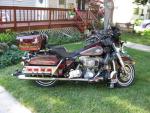
Softail 1988 50,000 miles
The manual says that the compensator nut is a bitch to get off, but I managed with just a large spanner, and didn't need to chock the primary chain! That worries me! One of you guys recently suggested I replace the entire mechanism cos if the nut come loose, it'll cause mayhem. I can see why. Don't know if the previous owner had any work done in this area, but it was looser than it should have been.
My question is this; I'm about to remove the clutch hubs but how do I undo the nut on the transmission shaft without the hubs rotating with the nut? The aluminium hub looks fragile so I don't want to chock it and end up damaging it. Also, I need to buy a puller. Can anyone describe the type that I need?
Finally, the manual says that I should probably replace the sprocket spring. Does this relate to my bike or a previous model?
By the way, a Harley drive belt in Scotland costs £223, about (US$360). No wonder Willie G. can afford a new hat!
Thanks again
The manual says that the compensator nut is a bitch to get off, but I managed with just a large spanner, and didn't need to chock the primary chain! That worries me! One of you guys recently suggested I replace the entire mechanism cos if the nut come loose, it'll cause mayhem. I can see why. Don't know if the previous owner had any work done in this area, but it was looser than it should have been.
My question is this; I'm about to remove the clutch hubs but how do I undo the nut on the transmission shaft without the hubs rotating with the nut? The aluminium hub looks fragile so I don't want to chock it and end up damaging it. Also, I need to buy a puller. Can anyone describe the type that I need?
Finally, the manual says that I should probably replace the sprocket spring. Does this relate to my bike or a previous model?
By the way, a Harley drive belt in Scotland costs £223, about (US$360). No wonder Willie G. can afford a new hat!
Thanks again

Big Kahuna HDF Member
Joined: Feb 2006
Posts: 23,881
Likes: 34
From: USA
Your comp nut will need to be retorqued to spec and use some loctite on it. (red). It will require some light heat to remove it again. Use a locking tool on the primary hubs and an air wrench to get the clutch hub nut off. Make sure you check the direction of the hub nut as it may be left hand threaded.

Road Master
Joined: Jul 2007
Posts: 1,009
Likes: 4
That model has a tapered main shaft to secure the clutch hub to the shaft and a woodruff key to keep it from rotating. As mentioned above the nut that holds it on is left hand threads and it is pretty tight.
I made a puller to pull that kind of hub. I used a 1/2" thick aluminum plate that was large enough to encompass the four towers that hold the spring in place. I drilled and tapped a 1/2-13 thread in the center of the plate and then drilled four 5/16" holes to line up with the four towers. Pass the four hold down screws through the plate and screw them into the towers. Thread the center forcing screw through the plate until it contacts the shaft end. Use something between the screw and shaft to protect the shaft threads. And be sure to remove the clutch push rod. Apply pressure with the screw. If it doesn't yield tap the end of the forcing screw with a hammer. Tighten and repeat. Be careful because those towers are fragile. Don't be surprised if you hear a loud pop when it comes off.
I made a puller to pull that kind of hub. I used a 1/2" thick aluminum plate that was large enough to encompass the four towers that hold the spring in place. I drilled and tapped a 1/2-13 thread in the center of the plate and then drilled four 5/16" holes to line up with the four towers. Pass the four hold down screws through the plate and screw them into the towers. Thread the center forcing screw through the plate until it contacts the shaft end. Use something between the screw and shaft to protect the shaft threads. And be sure to remove the clutch push rod. Apply pressure with the screw. If it doesn't yield tap the end of the forcing screw with a hammer. Tighten and repeat. Be careful because those towers are fragile. Don't be surprised if you hear a loud pop when it comes off.
Last edited by ajayrk; Nov 4, 2009 at 06:19 PM.
Thread Starter
|
Intermediate
Joined: Oct 2009
Posts: 32
Likes: 0
From: Stonehaven, Scotland
Thanks guys. That's really helpful. My local dealer told me that the transmission shaft is splined and that the hubs will just pull off! Musta got the model year wrong! He did tell me about a rubber chock put where the chain meets the sprocket that will aid removal of the compensator nut in future, or when torqueing it back up. Any home-based ideas about making one? Would a normal door stop wedge do?
Any thoughts about the sprocket spring?
Thanks.
Any thoughts about the sprocket spring?
Thanks.
Seasoned HDF Member


Joined: May 2008
Posts: 21,207
Likes: 12,794
From: South Carolina
If your bike was made in 1988, and still has the original mainshaft in the transmission, it is a tapered shaft, not splined. The splined shaft did not come out until 1990.
Trending Topics
Road Master
Joined: Jul 2007
Posts: 1,009
Likes: 4
Yes, Yes and Yes!
Last edited by ajayrk; Nov 10, 2009 at 08:10 AM.
HD Forum Stories
The Best of Harley-Davidson for Lifelong Riders
Harley-Davidson Fat Boy Becomes a Dark, Decepticon-Inspired Custom
Verdad Gallardo
6 Weirdest Harley-Davidsons Ever Sold to the Public
Verdad Gallardo
7 Times Harley-Davidson Chucked Tradition Out the Window
Verdad Gallardo
7 Surprising Harley-Davidson Products that Are Not Motorcycles
Verdad Gallardo
8 Best Harley-Davidson Motorcycles Ever
Pouria Savadkouei
10 Worst Harley-Davidson Motorcycles Ever
Pouria Savadkouei
Killer Custom's Jail Break Is The Breakout That Refused to Blend In
Verdad Gallardo
Crazy Bunderbike Build Looks Amazing, But Is It Impossible to Ride?
Verdad Gallardo
Harley-Davidson Reveals Super Cool Cafe Racer Concept
Verdad Gallardo
Thread
Thread Starter
Forum
Replies
Last Post
Pidgin
Primary/Transmission/Driveline/Clutch
3
Apr 29, 2008 01:30 PM
